Trying to choose between a townhome and a condo in Elk Grove Village or closer to Chicago’s lakefront? You are not alone. The two options can look similar from the outside, yet they work very differently once you dig into ownership, fees, maintenance, and financing. This guide breaks down the key differences in plain English and shows how location affects your day-to-day life and long-term costs. Let’s dive in.
Quick definitions in Illinois
What you own in a condo
In a typical condominium, you own the interior of your unit, often described as the air space within your walls. You also share an undivided interest in common elements like the roof, exterior, hallways, and grounds. Association rules and budgets are set in recorded documents governed by the Illinois Condominium Property Act.
What you own in a townhome
In the Chicago area, a townhome can mean two different things. Some townhomes are fee-simple, which means you own the land and structure, similar to an attached single-family home. Others are legally condominiums in a townhouse form, where you own the interior and share common elements through an association.
Why labels can mislead
The word “townhome” does not guarantee fee-simple ownership. Always confirm how the property is titled by reviewing the deed and the association declaration and bylaws. This step affects your responsibilities, insurance, and financing.
Costs that matter each month
Assessments and reserves
Condo associations collect monthly fees to fund building insurance for common areas, utilities in common spaces, landscaping, reserve savings for big repairs, and sometimes heat or water. In fee-simple townhome communities, dues may cover shared items like snow removal, private roads, or landscaping. Budgets and formulas vary by community, and special assessments can occur if reserves fall short.
Taxes in Cook County
Both condos and fee-simple townhomes receive their own property tax bills. Your effective tax burden depends on assessed value and local rates from Cook County and the applicable municipality and districts. It is smart to review the current assessed value and recent tax history during due diligence.
Insurance basics
Condo buildings carry a master policy that covers the structure and common elements, while you carry an HO-6 policy for your unit’s interior, personal property, and liability. Fee-simple townhome owners typically insure the entire structure. Pay attention to how deductibles are handled, since some associations may assess part of a large deductible to owners.
Special assessments risk
Aging buildings or major projects can trigger special assessments if reserves are not sufficient. Review the association’s reserve study, budget, and meeting minutes to gauge future needs. Items like façade work, roof replacement, elevators, and mechanical systems are common drivers in older Chicago buildings.
Maintenance and responsibility
Typical condo maintenance
In most condos, the association maintains the exterior, roof, structural elements, and common systems. You usually handle interior finishes and fixtures, and sometimes your own HVAC if the unit is individually metered. The split of duties will be spelled out in the governing documents.
Typical fee-simple townhome
With fee-simple townhomes, you are usually responsible for the structure, roof, and exterior, along with any yard areas. If a homeowners association exists, it may cover certain shared items like driveways or landscaping. Confirm the exact responsibilities in the HOA declaration.
Management and reserves
Some communities are professionally managed, while others are self-managed. Professional management can support predictable operations but may increase costs. Healthy reserves and active, transparent board governance reduce the risk of deferred maintenance and surprise bills.
Financing and resale
Condo project approval
Lenders often require condominium projects to meet Fannie Mae, Freddie Mac, or FHA guidelines. Buildings with high investor ratios, rental caps, or litigation might limit loan options. This can affect interest rates, timelines, and some buyers’ eligibility.
Townhome financing
Fee-simple townhomes are often underwritten like single-family homes, which can simplify financing. Townhomes that are legally condominiums will follow condo project rules, so clarify the legal structure early with your lender.
Resale and marketability
Projects with strong reserves, stable owner occupancy, and clear rules typically have smoother resales. Buildings with high investor concentrations or unresolved capital needs can face tougher financing and marketing. Ask for data on owner-occupancy and any pending litigation.
Lifestyle trade-offs in the Chicago area
Privacy and space
Townhomes often offer more privacy with fewer shared walls, plus direct entrances and attached garages. Condos, especially in high-density buildings, involve more vertical neighbors and shared corridors. Your tolerance for noise and desire for a private entrance are important factors.
Amenities and convenience
Lakefront and downtown condos often feature amenities like fitness centers, pools, door staff, and on-site maintenance. Townhome communities tend to have fewer shared amenities but provide private garages, small yards, and street-level access. Decide whether convenience and services outweigh the extra fees.
Commute and location
Condos near the city’s core deliver walkability, transit access, and proximity to entertainment. Suburban townhomes in areas like Elk Grove Village usually mean more driving but more space. Consider your work location and weekly routine before choosing.
Parking, yards, pets, rentals
Townhomes more commonly include private garages and small yards. Many city condos require separate parking purchases or leases. Pet rules and rental policies vary widely by association, so confirm them in the governing documents before you write an offer.
Elk Grove Village vs lakefront reality
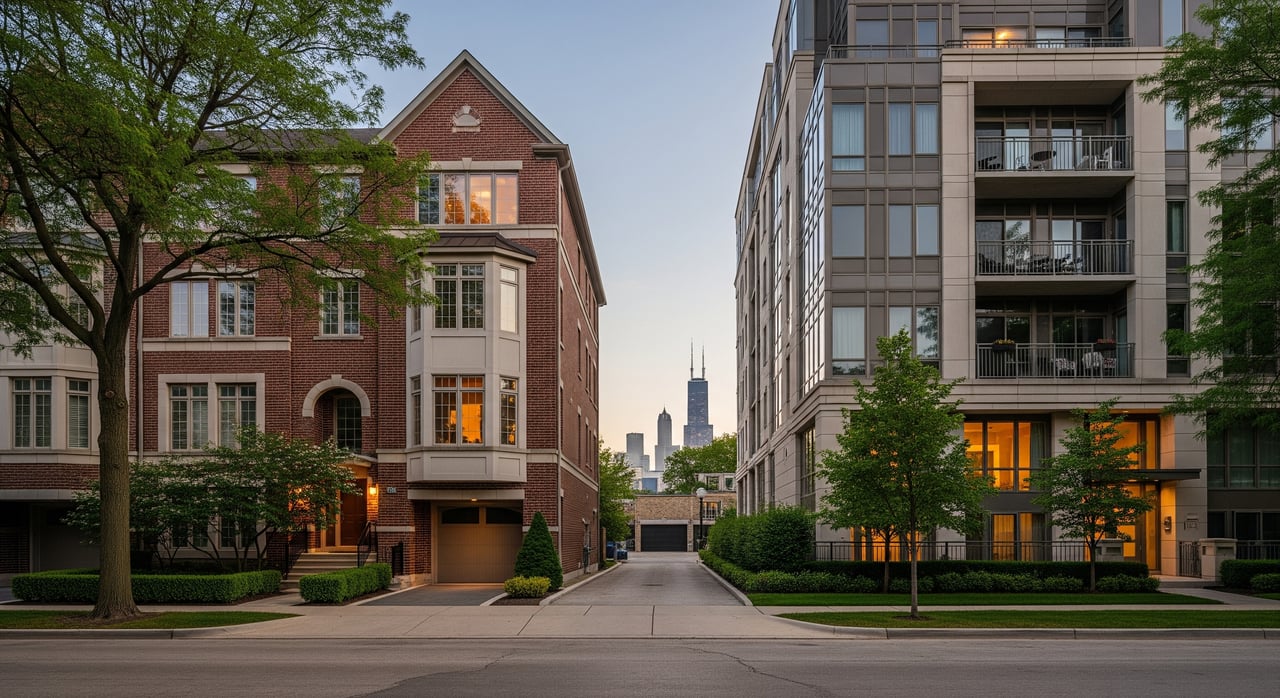
- Product mix: Lakefront and core neighborhoods lean toward high-rise condos and loft conversions with full-service amenities. Elk Grove Village and nearby northwest suburbs offer more fee-simple townhomes and attached single-family communities.
- Monthly costs: Amenity-rich downtown towers often carry higher assessments due to staffing, elevators, and shared utilities. Suburban townhome communities can have lower dues, but fee-simple owners will budget for exterior upkeep.
- Building age and capital needs: Older city buildings may require façade work, window updates, or mechanical modernization. Suburban communities vary by age, so review reserve studies and recent projects in either location.
Smart due diligence checklist
Before you commit, ask for and review:
- Declaration, bylaws, and rules and regulations.
- Current budget, recent financial statements, and the most recent reserve study or funding policy.
- Board meeting minutes for the past 12 months and any notices of special assessments or litigation.
- Master insurance certificate and clarity on deductibles.
- Owner-occupancy and rental percentages, plus any rental restrictions.
- Parking and storage rights, bike and pet policies, and any short-term rental rules.
- Utility setup, HVAC responsibility, and code compliance for the unit.
- Lender acceptance of the project if buying a condo, including Fannie Mae, Freddie Mac, or FHA eligibility.
Decision prompts to clarify your fit
Ask yourself:
- Do you prioritize walkability and amenities, or private outdoor space and a garage?
- How comfortable are you with association governance and the possibility of special assessments?
- Is simpler financing and more control over your exterior important?
- Will pet policies, rental rules, or parking availability shape your day-to-day life?
Next steps
- Narrow your target areas between lakefront or core neighborhoods and northwest suburbs like Elk Grove Village, then set your price band.
- Get pre-approved and confirm any condo project requirements with your lender.
- Build a monthly cost worksheet that includes mortgage, taxes, HOA dues, insurance, and estimated utilities and maintenance.
- Request association documents early and plan for an inspection and attorney review.
If you want a clear, side-by-side list of options that match your lifestyle and budget, we can help you compare specific buildings and townhome communities. Reach out to The Kohler Group to Schedule a Complimentary Market Consultation.
FAQs
What is the legal difference between a condo and a fee-simple townhome in Illinois?
- In a condo you typically own the interior plus shared common elements, while a fee-simple townhome usually includes ownership of the land and structure, similar to an attached single-family home.
How do HOA assessments differ between downtown condos and suburban townhomes?
- Amenity-rich high-rise condos often have higher assessments due to staffing and shared systems, while suburban townhome dues may be lower but fee-simple owners budget for exterior upkeep.
What documents should I review before buying any condo or townhome near Chicago?
- Request the declaration, bylaws, rules, budget, financials, reserve study, meeting minutes, insurance certificate, and any notices of special assessments or litigation.
How do financing requirements differ for condos versus townhomes?
- Many condos must meet project approval standards for lenders, while fee-simple townhomes are often financed like single-family homes, which can simplify underwriting.
Are townhomes easier to maintain than condos in practice?
- Townhomes can reduce shared governance but may increase personal exterior maintenance, while condos shift exterior and structural work to the association in exchange for monthly fees.
Can I rent out my condo or townhome in the Chicago area?
- Possibly, but rental rules and caps vary by association and city, so check governing documents and local regulations before you buy or lease.